Charge-off payment plans
Simplifying payment plans for agents and customers
When an auto loan charges off, customers can often keep their car with a payment plan. Setting one up took a 30-minute call and about 30 task switches. I designed a guided workflow that cut it to three steps, with the system doing the math and tracking every plan. Calls dropped from 30+ minutes to about 5.
Impact
per call, down from 30+
replacing about 30 task switches
observed to find the real problem
Challenge
Every payment plan depended on a long phone call. Agents checked eligibility in a spreadsheet, did the math by hand, and tracked plans in notes. Every later payment meant another call. Customers could keep their cars, but few succeeded.
The request was framed around revenue. I pushed to find where the process broke down first, so the tool would fix the real problem.
Collaboration
I owned design end to end: research, flow, screens, and usability testing. I worked with 2 PMs on requirements, 8 engineers on what Pega could support, and analytics on tracking.
Designing for two people on one call
Every decision had to work for both sides of the call.
Agents
Negotiate with a stressed customer while switching tools and doing math on a live call.
Customers
Want to keep their car, but face a long, confusing call and another call for every payment.
User research
I interviewed 5 high- and low-performing agents, listened to 50+ calls, and mapped every tool they touched.
Juggling too much
Agents were negotiating, tracking details, and working a spreadsheet all at once.
Top agents had a script
The best performers did the same steps in the same order on every call.
Everyone else improvised
Struggling agents did steps out of order and forgot parts of the process.
Math by hand
Calculating terms during a live call meant results varied from agent to agent.
Understanding the workflow
Mapping one call from start to finish made the problem easy to see.
- 1. Verify
- Confirm who's calling
- Pull up the account
- 2. Qualify
- Check eligibility in a separate spreadsheet
- Work out terms by hand
- 3. Take payment
- Explain the rules from memory
- Take a one-time payment
- 4. Track
- Type the plan into a notes field
- Every later payment means another call
Agents were doing by hand what the system should do.
Design process
My first version was a seven-step guided flow with negotiation built in, so newer agents could use it without extra training. Eight agents tested it on real call scenarios, and most liked the guided path. Operations leadership worried guided negotiation would slow down experienced agents.
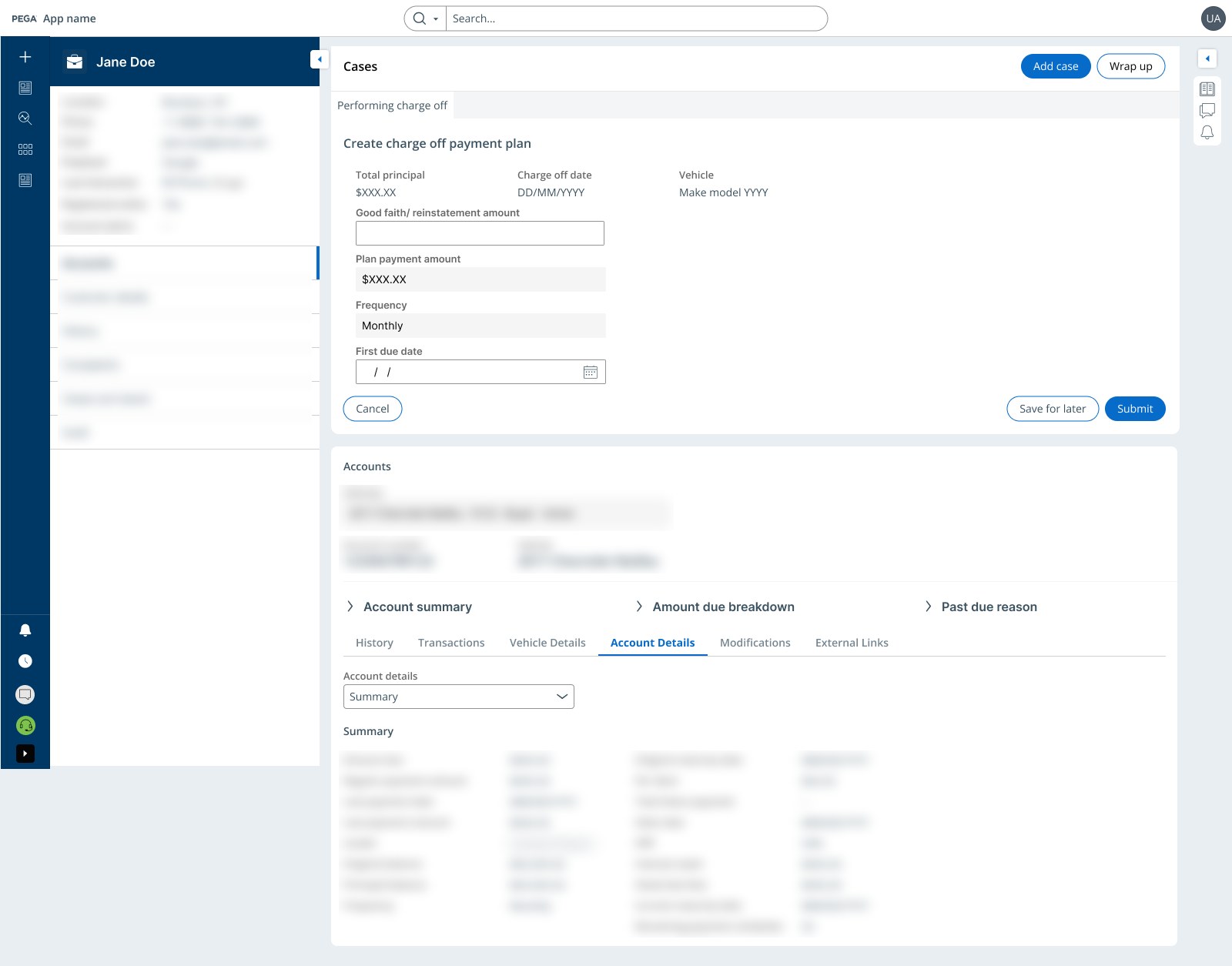
Product and operations revisited the requirements. Negotiation moved to training, calculations moved to the backend, and the MVP dropped to three steps. My research favored keeping guided negotiation, so we agreed the tool could add it back if needed.
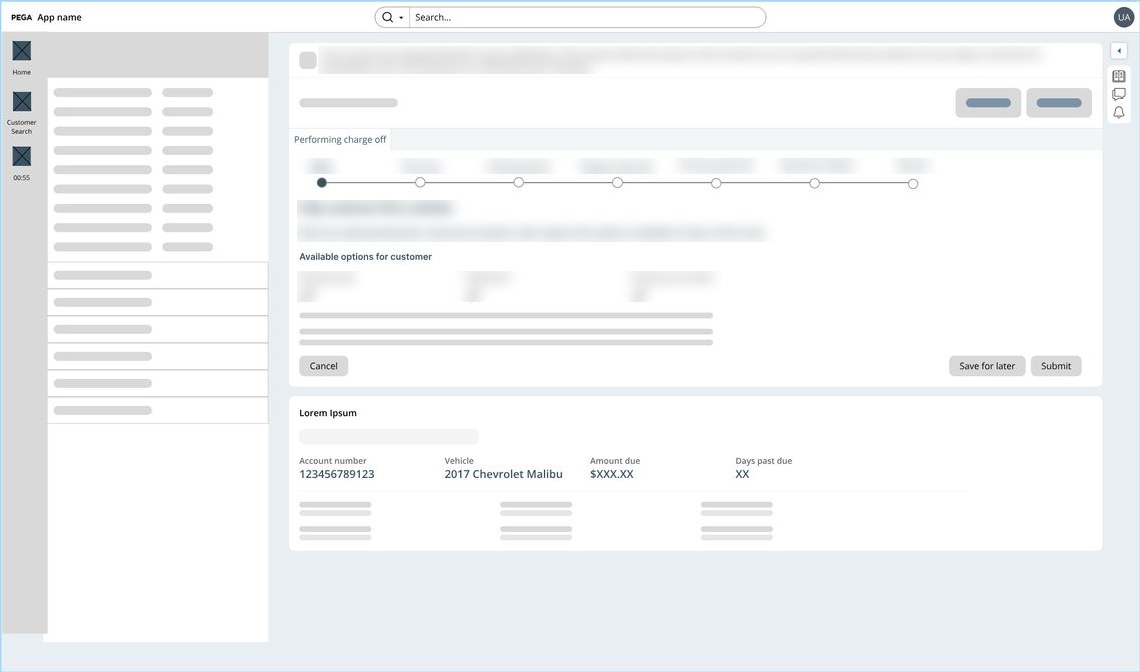
 Wireframe · 7 steps
Final design · 3 steps
Design guidelines
I turned the research into four guidelines for every design choice.
Follow the best agent's process
One guided path, in the sequence top performers already used.
No math by hand
If the system has the data, the system does the calculation.
As little as possible left to memory
What agents need to say should be built into the flow as a checklist.
Every plan is a record
Each plan is tracked in the system with its payment schedule.
Key features
About 30 task switches across six tools became three guided steps in one system.
Key features for agents
One amount in, a full plan out
The agent enters one number and the system calculates the payment and schedule.
Three guided steps
The call follows the order top agents already used, all in one place.
A required checklist
Everything the agent must explain is built into the flow, so less depends on memory.
Key outcomes
- Shorter calls
- Customers in a stressful moment spend about 5 minutes on the phone, down from 30+.
- Fair, accurate plans
- Every customer gets the same correct terms, no matter which agent they reach.
- Visibility for the business
- Every plan is a tracked case with scheduled payments, so the business can see who's on a plan and plan collections grew.
Results after launch
The tool launched in May 2025, and I watched agents use it on live calls.
Average call time
Task switches replaced by guided steps
Reflection
What I'd do differently: set up baseline metrics before launch to measure impact directly. I'd also watch newer agents use the simpler tool to see if negotiation should come back. What came next: a self-service version, so customers could pick a plan and pay without calling.
More of my work
- 1Read →
Repaying after repossession
Helping customers understand and resolve what they still owe
- 2Read →
Research agent & tool for content
Turning content guesswork into tested theories
- 3Read →
AI customer service assistant
Giving a collections chatbot a voice customers trust
- 4Read →
Design system & research templates
Giving the team shared building blocks instead of blank pages
- 5See all →
All work
Every project, plus additional work and experiments